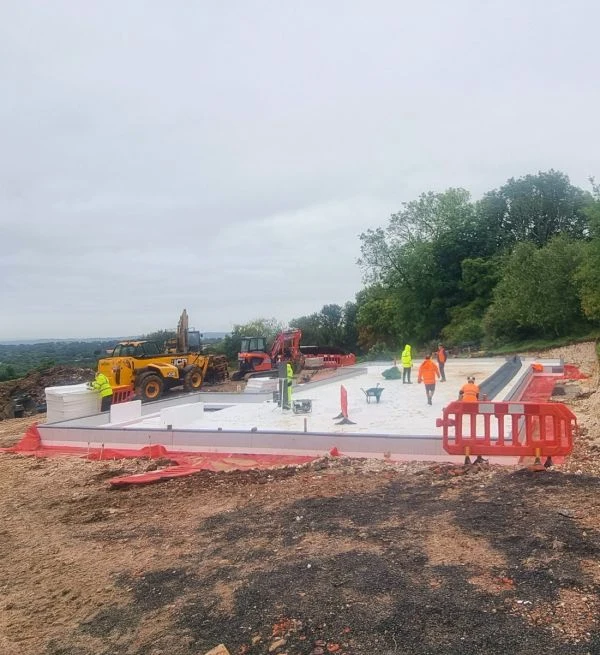
Self builders can help assemble an ISOQUICK insulation system, with support arranged through the selected installation package.
The role needs to be clearly defined. Helping assemble the insulation components is one part of the foundation work. Ground preparation, structural design and concrete placement each have their own requirements and responsibilities.
Before deciding what to undertake yourself, establish what your quotation includes and which work you need to arrange separately.
What can a self builder help with?
ISOQUICK's published Value Installation Package provides one experienced team member, together with the necessary tools and equipment, to lead and guide installation of the insulation system.
Under this arrangement, the customer provides a prepared base and assisting labour.
This gives the self builder a defined role in assembling the insulation with experienced guidance on site. The scope of that involvement should be agreed before installation.
Your quotation should establish what is included for your project. Do not assume that support for insulation assembly includes every operation needed to complete the foundation.
What needs to be ready beforehand?
The supporting base must be prepared before the insulation installation begins. Groundworks need to follow the project requirements and the engineer's specification where applicable.
Before agreeing an installation date, establish who is responsible for:
- Ground preparation and the supporting sub-base.
- Setting out and checking levels.
- Drainage and incoming service positions.
- Delivery access and storage for the insulation components.
- Providing the assisting labour required by the installation package.
For a self builder managing subcontractors, this means making sure the groundworks contractor understands the requirements of the selected system.
Resolve questions about the base before the installation team arrives. A booked installation date does not mean the preceding work is ready.
For the wider construction process, see our insulated raft foundation installation sequence.
What remains the structural engineer's responsibility?
The appointed structural engineer remains responsible for designing and approving the concrete slab, reinforcement and other structural elements.
Their assessment must account for the ground conditions and the loads from the proposed building. Helping assemble the insulation does not change those design responsibilities.
ISOQUICK can coordinate its system layout and relevant construction details with the project team. This support works alongside the appointed structural engineer's role.
Before work begins, establish which drawings govern the installation and who can approve changes. If conditions on site differ from the design information, refer the issue to the responsible designer before proceeding with the affected work.
Who arranges the membranes, reinforcement and concrete?
Confirm this when discussing the installation package.
The published Value Installation Package describes support for installing the ISOQUICK insulation system onto a customer-prepared base, with assisting labour provided by the customer.
Other quoted packages may include additional operations, such as blinding, damp-proof membrane installation, reinforcement and concrete works.
Ask for the scope to be set out clearly. Identify what ISOQUICK will provide, what your contractors will undertake and which arrangements remain your responsibility.
Also establish who will complete any required checks before work is covered.
What should you ask before offering your own labour?
Explain your practical experience and the help you expect to provide. The discussion should establish whether the proposed arrangement suits your project.
Useful questions include:
- Which insulation assembly tasks will I help with?
- What assisting labour must I provide?
- Which tasks will the ISOQUICK team member lead?
- What must be completed before the team arrives?
- What site arrangements must I provide?
- Who checks the assembly before the next stage?
The answers should reflect the agreed package and project layout.
Avoid assuming that another self builder's experience will translate directly to your site. Different footprints and construction details can change the work involved.
How long will the work take?
Separate insulation assembly from the complete foundation programme.
Ground preparation, service installation, membranes, reinforcement and concrete placement all need to be coordinated. Completing the concrete pour and being ready for subsequent construction are also separate programme decisions.
A photograph or installation video can help explain the process, but it does not establish a reliable duration for another project.
When discussing an installation estimate, ask which stage it covers and what needs to be ready beforehand. Agree the timing of subsequent work with the responsible construction team.
What information should you send ISOQUICK?
Start with the plans and project information you already have.
Explain your proposed wall construction and current design stage. Include available ground investigation and structural information, together with your anticipated construction programme.
Make clear that you would like to provide assisting labour for insulation assembly. This allows the conversation to cover your intended involvement and the installation package.
You do not need every detail settled before making an initial enquiry. Identify what is available and what remains under development.
Our foundation quotation checklist explains which information is useful at this stage.