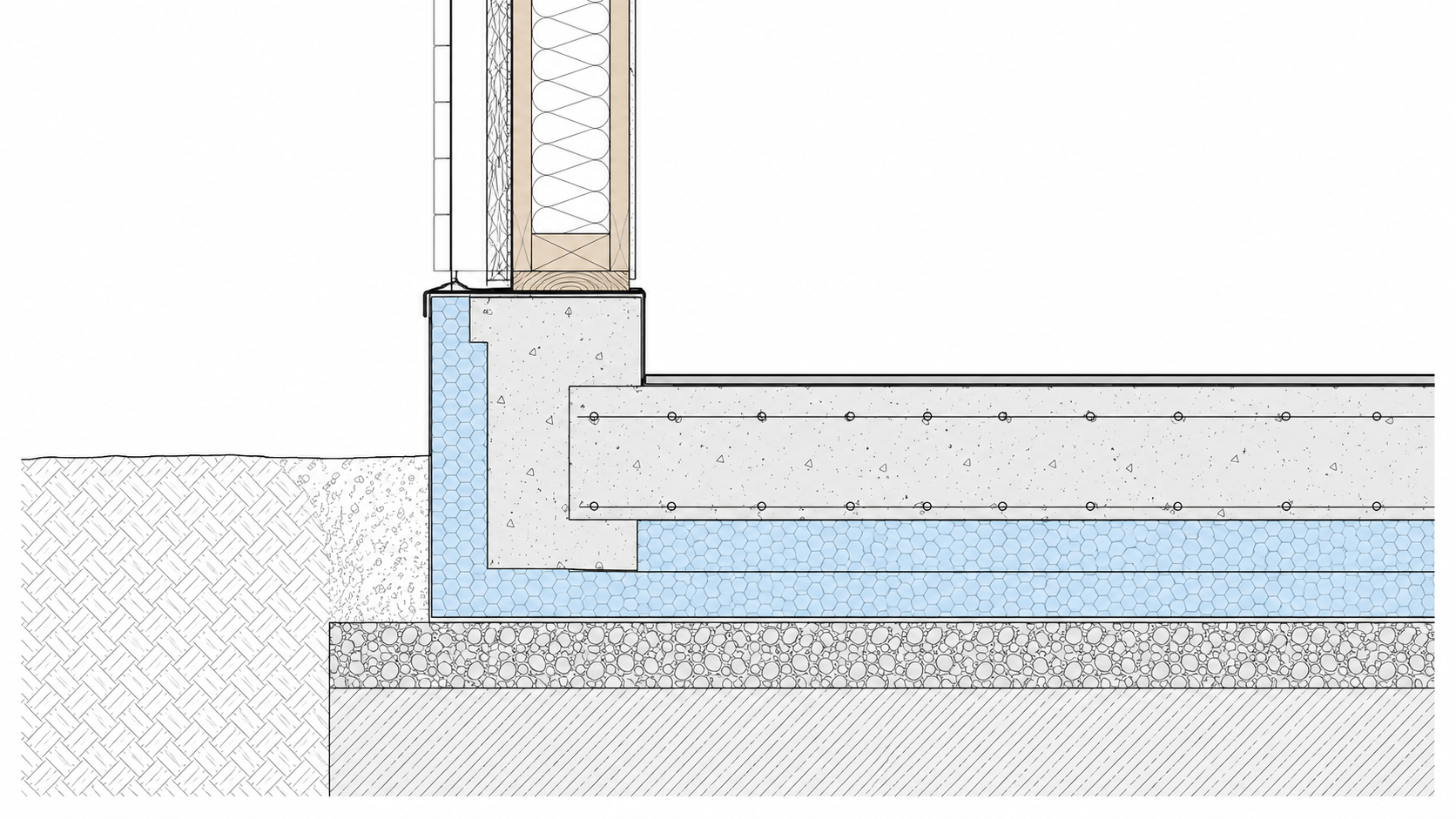
A well-insulated floor can still lose additional heat at the point where it meets the external wall.
This is because thermal performance at the wall-to-floor junction depends on more than the thickness of insulation beneath the slab. The position of the wall, the continuity of the insulation, the materials used at the perimeter and the structural load path can all affect heat flow through the junction.
So how do you reduce thermal bridging at a floor slab?
The principle is straightforward: maintain the thermal envelope as continuously as practicable around the wall-to-floor junction, while ensuring that the wall remains properly supported and the complete detail works structurally, thermally and in terms of moisture management.
The exact performance of the junction should then be assessed for the construction being proposed.
Continue reading
Unlock the full article and all gated content across the ISOQUICK Knowledge Centre.
Submit the form above — this page unlocks automatically once we receive it.